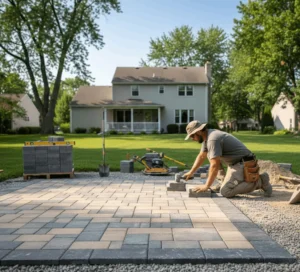
One of the most gratifying contributions to outdoor living is a patio, especially in a community like Williamsville, NY, where outdoor spaces are particularly useful given the seasonal climate.
Education on how to build a patio using pavers provides them with the ability to control patio designs, durability, and performance over time. A paver patio should be able to withstand a freeze-thaw cycle, drain properly, increase property value when done properly, and fit organically into the Western New York landscape.
This manual describes the entire procedure in a clear, practical manner, with particular attention to local soil conditions, climatic factors, and established construction methods. It is a small sitting in the backyard or a bigger entertainment area; you can be sure of a long-term outcome by learning the basics of the matter.
Understanding Local Conditions for a Correct Paver Patio Installation in Williamsville, NY
Williamsville, NY, has cold winters, spring thawing, and rainy seasons. All these forces require ground stability and drainage. The stone patio construction in that area can only be successful when it is based on solid ground, grading, and climate-resistant materials.
By disregarding such information, shifting pavers, pooling water, and frost heaves are common issues within just a few seasons. A plan for the patio’s location, size, and elevation should be prepared beforehand. The foundation slope should be directed toward the yard from the house to facilitate proper patio drainage and prevent water from stagnating around the foundation.
Planning the Patio Design and Layout
Aesthetic and functional decisions affect the visuals and functionality. A brick paver patio is popular among homeowners for its flexibility in pattern and color, as well as its resistance to cracking. Others discuss stone patio design ideas that integrate natural textures befitting the suburban environment of Williamsville.
Layout planning involves identifying the patio shape, final height, and walkway interconnections (where necessary). The installation of pavers should align with the patio’s style when the patio is connected to the paths. At this stage, ground leveling will be used to avoid uneven surfaces in the future.
Preparing the Ground for Long-Term Stability
Preparing the ground for patio pavers is one of the most critical steps in patio installation, particularly in Western New York, where soils are heavy in clay. The standard depth of excavation is 7-9 inches to fit base materials and pavers. This is depth, which helps prevent frost movement.
Ground compaction should be done after excavation. Correct preparation of the paver base will ensure the patio does not sink with seasonal changes. The most obvious reason for patio failure is skipping or hurrying in this step.
Building a Strong Base Layer
The query many people interested in homeownership ask is what to put under pavers for long-lasting patios, and the answer is in layered construction. A thin layer of gravel allows water to pass while providing structural strength. Upon it, a sand bed is formed to support patio pavers. This will hold pavers in position.
The compaction must be performed in several passes to remove air pockets. This measure is of great importance to everyone laying a patio with pavers in Williamsville, where ground movement is common due to shifting seasons.
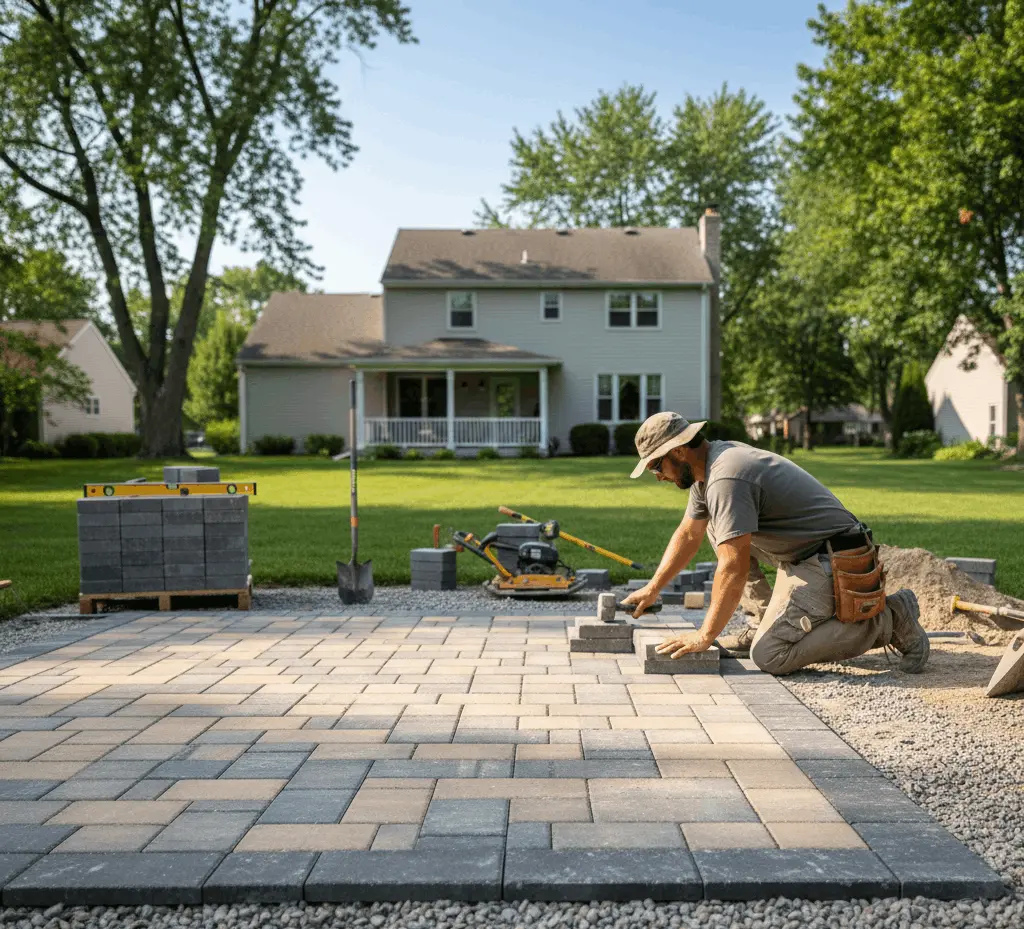
Installing Edge Restraints and Drainage Control
Paver edge restraints are necessary to eliminate lateral movement over time. These restraints maintain the patio’s shape even during freeze-thaw cycles. In their absence, pavers may creep, creating gaps and uneven surfaces.
At this stage, drainage considerations should also be taken into account. The right patio drainage prevents water from entering the upper levels and the base. Also included in a significant difference in patio longevity are subtle grading and the choice of base material.
Setting and Aligning the Pavers
After preparing the base, the patio block installation starts. Pavers are installed neatly in the selected pattern, either classic running bond, herringbone, or a custom walkway pattern. The constant distance keeps the joints consistent and professional.
This is the most critical step in paver walkway installation that needs patience. Modifications can now be made more easily than after compaction. With either conventional bricks or self-made concrete patio paving, alignment is a factor in structural integrity and aesthetics.
Compacting, Joint Sand, and Final Finishing
The surface is compacted after placement to ensure the pavers sink into the sand layer. The gaps are then swept with joint sand, creating an interlocked patio. This measure prevents the growth and movements of the weeds.
Joint filling and final compaction of the patio should never be rushed for homeowners interested in making a stone patio. These final procedures will determine the patio’s effectiveness in withstanding foot traffic, weather conditions, and wear and tear.
Professional vs DIY Patio Installation
Although most of the homeowners find it fun to work on their own projects, big or complex patios may require the services of professionals. Services such as the paver walkway installation in Williamsville, NY, consider the local soil conditions, drainage requirements, and material choices.
Companies like Soil and Seed Landscaping offer experience in paver patio installation, reducing long-term maintenance issues and extending the product’s lifespan. You can go partially DIY, but repairs can be costly if you make a mistake. To avoid that, get a consultation from a professional planner.
Read more: Village of Williamsville, NY, Streets and Sidewalk guidelines.
Maintenance and Seasonal Care
Cleaning, replacing joint sand, and winter protection of the paver patio in Williamsville can be done as maintenance practices. Do not use harsh deicing salts, as they may damage surfaces. Routine checkups can detect small changes before they become significant problems. Maintain it well, and your patio will appear wonderful for decades, whether a recreational or entertainment facility.
Why Paver Patios Are Ideal for Williamsville Homes
Simplifying the process of building a patio with pavers will enable homeowners to create outdoor areas that are useful year-round. Pavers are versatile, repairable, and attractive. They cope with local weather conditions through appropriate paver base preparation.
Soil and Seed Landscaping provides professional assistance to anyone who needs help designing their patio, ensuring it is both functional and visually appealing for the Williamsville property.
Conclusion
The process of learning to construct a patio with pavers in Williamsville, NY, is not about laying the stones on the ground. Planning and base preparation are just part of it; draining and minor finishing details are the keys to long-term success.
Knowing the local soil conditions and following the established rules for building a home patio would help the homeowner create a durable, attractive, and stable patio that can be used year-round. Whether you go DIY or professional, know how to build a patio with pavers and make a worthwhile investment in your outdoor living experience.
Contact Soil and Seed Landscaping
Learn how to build a patio using pavers in Williamsville, NY, with this step-by-step guide. For professional consultation and installation, contact Soil and Seed Landscaping today!
FAQs
Paver patio life expectancy in Williamsville, NY?
Properly installed and serviced, a paver patio should last 25 years or more, despite Western New York’s freeze-thaw cycles.
Is it compatible with heavy rain for 25 years?
Yes, with proper base layers and drainage systems, pavers can control moisture and will not crack due to temperature changes.
Should a paver patio installation in Williamsville, NY, be done professionally?
In larger patios or more elaborate designs, professional installation lowers long-term repair costs and provides adequate drainage and stability.