
 By
By Shade can make landscaping frustrating. Grass thins out, flowers struggle to bloom, and plants that looked promising in spring may fade by summer.
Instead of fighting the conditions, a better approach is to design around them. Western New York properties often have mature trees and established canopies that create anything from dappled shade to areas with very little direct sunlight.
With the right plants, ground covers, mulch, and hardscape, shaded areas can become attractive, functional parts of the landscape rather than constant maintenance problems.
Understand Your Type of Shade
Not all shade is the same. Before choosing plants or materials, pay attention to how much sunlight an area receives throughout the day.
| Shade Type | Typical Conditions | Suitable Options |
|---|---|---|
| Dappled shade | Light filtered through tree branches | Hostas, ferns, coral bells |
| Partial shade | Some direct sunlight during the day | Fine fescue, perennials, shrubs |
| Dense shade | Very little direct sunlight | Ground covers, mulch, hardscape |
Walk through your yard at different times of day to see where sunlight reaches the ground. An area that receives morning sun may have very different planting options from one that remains shaded all day.
Tree roots also matter. Mature maples and oaks can compete with plants for moisture and nutrients, making some areas difficult for traditional lawn or flower beds.
Ground Covers for Shaded Yards
When grass repeatedly fails under a dense canopy, shade-tolerant ground covers can provide a more practical alternative.
Pachysandra is a popular option for established shade. Once established, it provides dense coverage and requires relatively little ongoing maintenance.
Wild ginger can work well in heavier shade and provides a lower-growing alternative for woodland-style areas.
Ajuga adds color and works particularly well in transition areas where shade changes throughout the day.
Hostas aren’t technically ground covers, but they’re excellent foundation plants for shade beds. Pairing hostas with ferns and coral bells can create layers of texture and color without relying on struggling turf.
The best combination depends on the amount of light, soil conditions, available moisture, and existing tree roots.
Mulch Under Trees: What to Know
Shaded areas beneath mature trees need careful mulch installation because tree roots often occupy the same space.
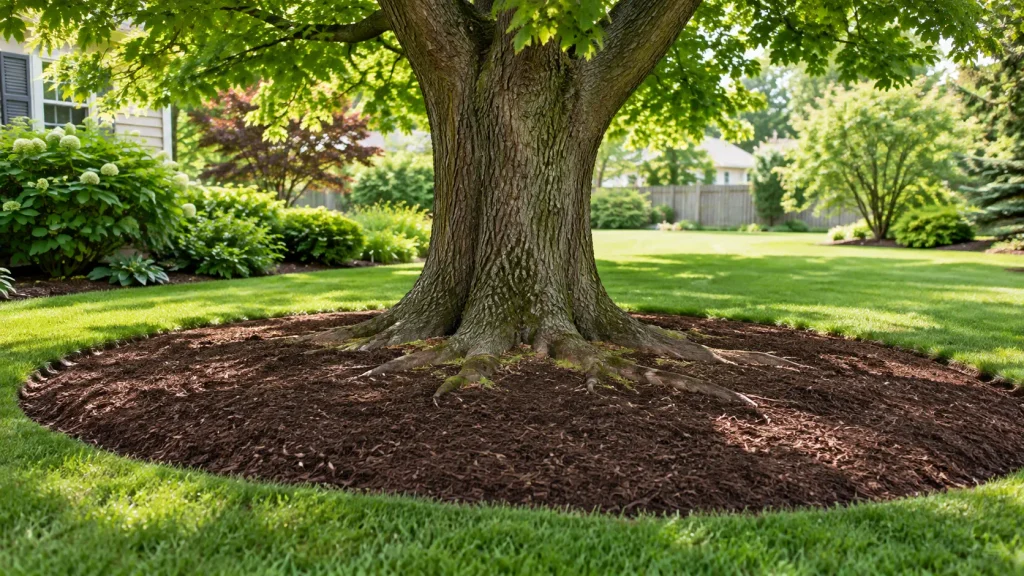
A 2–3 inch layer of mulch can help retain moisture and moderate soil temperatures. However, mulch should never be piled directly against the trunk.
Keep mulch several inches away from the base of the tree and avoid creating a “volcano” around the trunk. Excessive mulch can trap moisture against the bark and interfere with the tree’s root flare.
For homeowners considering mulch installation in Buffalo, proper depth and placement are just as important as the appearance of the finished bed.
When Hardscape Makes More Sense
Some areas are simply too shaded for plants to thrive. Dense canopies combined with heavy root competition can make maintaining grass or even shade-tolerant ground covers difficult.
In those situations, hardscape can turn an unusable area into functional outdoor space.
Good options include:
- Paver patios
- Walkways
- Gravel seating areas
- Decomposed granite
- Small outdoor gathering spaces
A paver patio installation beneath or near mature trees requires careful planning. Excavation should account for existing root systems rather than unnecessarily cutting major roots.
For informal areas, gravel can also provide a low-maintenance surface while requiring less extensive excavation than some traditional hardscape installations.
Can Grass Grow in Shade?
Not every shaded lawn needs to be replaced. Areas that receive partial sunlight may still support grass when the right variety and maintenance practices are used.
Fine fescue blends are generally more shade-tolerant than Kentucky bluegrass and perennial ryegrass, making them worth considering for lawns with partial or dappled shade.
For shaded turf:
- Choose a shade-tolerant grass blend.
- Consider overseeding in early fall.
- Keep mowing height around 3–3.5 inches.
- Avoid excessive fertilizer applications.
- Monitor moisture carefully beneath large trees.
However, dense shade is different. If grass consistently disappears beneath a thick canopy, replacing the turf with ground cover, mulch, or hardscape may provide a better long-term result.
Landscape Design That Works With Western NY Shade
Effective shade-friendly landscape design in Western NY starts by treating different parts of the yard according to their conditions.
Deep shade: Use ground covers, mulch, or carefully planned hardscape where plants and grass struggle.
Moderate shade: Layer hostas, ferns, coral bells, and suitable shrubs to create texture and depth.
Partial shade: Use perennials, shade-tolerant lawn varieties, and plants that can handle changing light throughout the day.
This approach creates a landscape that works with the property instead of trying to make every part of the yard perform like a full-sun area.
Soil conditions, drainage, tree roots, and available sunlight should all be considered before choosing plants or materials. A thoughtful plan can also reduce the amount of maintenance required once the landscape becomes established.
Soil and Seed Landscaping provides shade landscaping and other landscaping services throughout Western New York, including Clarence, Amherst, Williamsville, Kenmore, Lockport, Hamburg, East Aurora, Cheektowaga, Depew, Elma, Akron, and surrounding communities.
Frequently Asked Questions
What ground cover grows best under mature trees in Western NY?
Pachysandra is a commonly used option for established shade. Wild ginger, ajuga, and other shade-tolerant plants can also work depending on soil, moisture, and the amount of available light.
Can I grow grass in a shaded Western NY yard?
Yes, if the area receives partial or dappled sunlight. Fine fescue blends are generally better suited to shade than many traditional cool-season lawn grasses. Areas with very dense shade may be better suited to ground cover or hardscape.
How much mulch should I use under trees?
A 2–3 inch layer is generally sufficient for mulch beds. Keep mulch away from the tree trunk and avoid piling it around the base.
Should I use plants or hardscape in a heavily shaded area?
It depends on the conditions. If dense shade and tree-root competition make plant growth difficult, hardscape or a combination of mulch and hardscape may provide a more practical solution.
Conclusion
Shade doesn’t have to limit the potential of your yard. By considering sunlight, soil, drainage, and existing tree roots, you can choose plants and materials that are better suited to the property.
Soil and Seed Landscaping can help Western New York homeowners develop shade-friendly landscapes, from planting and mulch installation to hardscape and ongoing maintenance.
For additional guidance on selecting plants suited to different site conditions, visit the USDA Natural Resources Conservation Service.