
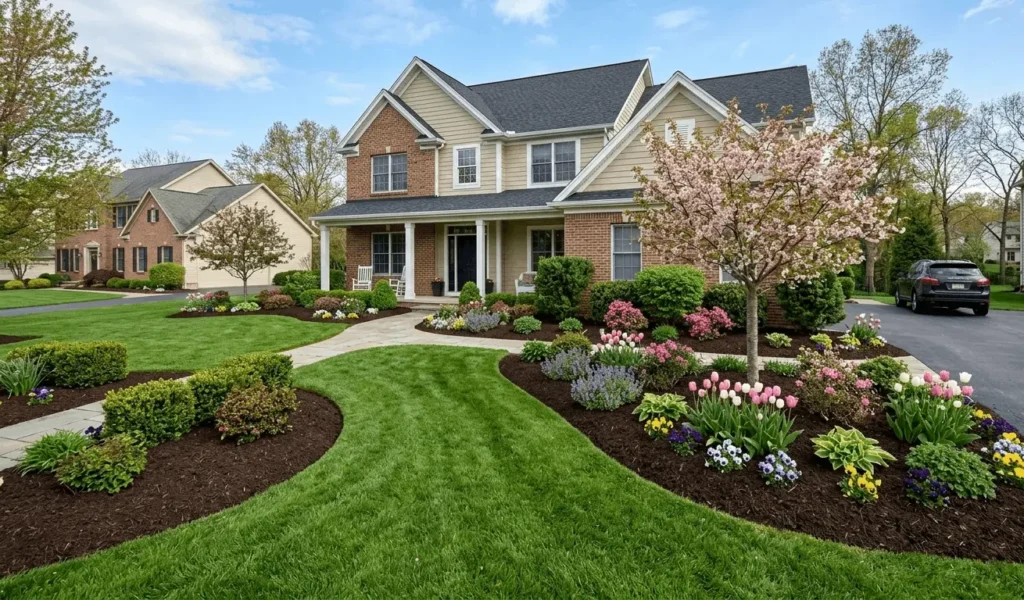
Drive through East Amherst neighborhoods, around Transit Road, near Glen Oak Golf Course, or along the residential streets close to Harris Hill Road, and one thing is immediately obvious: the best-looking properties all have healthy, well-defined, and meticulously maintained flower beds.
The secret? It’s not rare plants, fancy stonework, or elaborate garden designs. Most of the time, it’s high-quality mulch applied correctly. Mulch is a simple, cost-effective solution that instantly improves curb appeal, reduces maintenance, protects plant roots, and encourages stronger, healthier plants.
But here’s what many homeowners in Western New York don’t realize: not all mulch performs the same, especially on the local soils of East Amherst. Our heavy clay soils can trap moisture if the wrong mulch is used, creating stress for plant roots and encouraging pest problems.
After more than a decade of installing mulch in East Amherst, Clarence, Williamsville, and surrounding Amherst neighborhoods, we’ve developed a deep understanding of which materials perform best locally. This guide will help you make the right choices for your garden while explaining how professional installation can maximize results.
Quick Summary: Best Mulch Choices for East Amherst
If you want a fast answer before diving into the details:
| Goal | Best Mulch | Recommended Depth | Local Tip |
|---|---|---|---|
| Soil Health | Triple-ground hardwood, leaf compost | 2–3 inches | Avoid “volcano” piles at tree trunks |
| Flower Beds | Cedar mulch (naturally insect-resistant) | 2–3 inches | Thin layers allow water & air to reach roots |
| Modern Landscaping / Curb Appeal | Black or dark brown dyed mulch | 2–3 inches | Contrasts well with stone and greenery |
Pro Tip: Always leave a 3-inch gap around plant stems and tree trunks to prevent rot, pests, and fungal growth. We call it the “don’t volcano” rule.
Why Mulch Matters in East Amherst Landscapes
Mulch is more than a decorative layer. In East Amherst and the surrounding Amherst area, it protects plants from common regional challenges:
- Cold winters can freeze roots and stress perennial plants
- Wet springs can create waterlogged soil, especially on heavy clay
- Humid summers that accelerate weed growth and dry out poorly irrigated beds
A proper mulch layer helps by:
- Retaining soil moisture during the hot summer months
- Insulating roots during winter freezes
- Suppressing weeds by blocking sunlight
- Enhancing soil health as organic mulch decomposes
- Reducing erosion during heavy spring rainfall
With consistent maintenance, mulch creates a stable environment where plants grow stronger, flowers last longer, and beds stay cleaner with minimal effort.
Understanding East Amherst Soil Conditions
East Amherst properties commonly sit on soils from the Niagara–Canandaigua–Cosad soil groups, which are clay-heavy and dense. These soils are excellent at retaining water but can become slow-draining during wet periods, particularly in our Western New York springs.
Choosing the wrong mulch type for these soils can lead to problems:
- Large hardwood chips may hold too much moisture, stressing roots
- Dyed mulch may compact if not spread evenly
- Thin layers of shredded bark often outperform bulk chips in wet spots
Neighborhood-specific examples:
- Near Glen Oak Golf Course, many properties experience drainage variations due to slopes, requiring more aerated mulch types like shredded bark or leaf compost.
- Around Harris Hill Road, older estates with heavy clay and compacted soil benefit from cedar mulch for flower beds to prevent suffocation of roots.
Local soil knowledge is essential for long-lasting, healthy garden beds.
Local soil knowledge is essential for long-lasting, healthy garden beds.
Homeowners often ask: “Which mulch is best?” The answer depends on plants, garden goals, and aesthetics. Here’s a detailed breakdown for East Amherst:
| Mulch Type | Best Use | Longevity | Soil Benefit | Local Considerations |
|---|---|---|---|---|
| Black/Brown Dyed | Decorative beds | 12–18 months | Mostly visual | Excellent for modern landscaping; ensure proper drainage in clay soils |
| Cedar Mulch | Flower beds, perennials | 2+ years | Natural insect resistance | Use the shredded bark version in heavy clay areas |
| Pine Bark | Acid-loving plants | ~12 months | Improves soil acidity | Works well in slightly raised beds to avoid waterlogging |
| Hardwood Mulch | General landscaping | 18 months | Adds nutrients | Suitable for high-end estates; not ideal near the roots of delicate plants |
| Hemlock | Premium garden beds | 18 months | Balanced moisture | Suitable for high-end estates; not ideal near roots of delicate plants |
Organic Mulch for Garden Health
Organic mulch is best for soil improvement and plant growth, especially in East Amherst’s clay soils. Common options include:
- Pine bark mulch – slowly decomposes, ideal for hydrangeas or rhododendrons
- Hardwood mulch – long-lasting, rich in natural nutrients
- Leaf compost or shredded leaves – eco-friendly, enriches soil structure
Installation Tip: Spread 2–3 inches deep while keeping mulch away from stems. As organic mulch decomposes, it nourishes the soil and improves its structure.
Decorative Mulch for Curb Appeal
If your goal is visual impact, decorative mulch transforms your garden instantly:
- Black mulch: Contrasts beautifully with greenery and stonework; popular in newer East Amherst developments
- Red mulch: Complements brick homes and bright flowers
- Brown mulch: Provides a natural woodland appearance
Pro Tip: Edging and even coverage matter. Uneven mulch can make beds look unkempt and shorten mulch longevity.
Mulching Around Trees and Flower Beds
Flower beds: Thinner mulches like cedar or pine bark allow water and air to penetrate roots.
Trees: Wider rings of hardwood mulch or wood chips help retain moisture, reduce competition from grass, and protect trunks.
Common mistake: Mulch piled high against tree trunks (“mulch volcano”). Leave a 3-inch gap to avoid rot and pests.
Bulk Mulch Delivery & Professional Installation in East Amherst
Searching “mulch near me” often leads homeowners to local garden centers, but hauling multiple bags is time-consuming and heavy.
Professional bulk delivery and spreading can save hours of labor and ensure:
- Correct mulch depth for healthy roots
- Even distribution across beds
- Clean edges and defined landscaping lines
- Reduced waste and longer-lasting coverage
Soil and Seed Landscaping serves East Amherst, Clarence, Williamsville, and Harris Hill, ensuring expert installation for properties of all sizes.
Timing Your Mulch Installation in Western New York
Best seasons for installation:
- Late spring (April–May): Ground has thawed; plants are actively growing
- Early fall (September): Protects roots before first frost
Maintenance tip: Refresh mulch once per year to maintain soil health, moisture, and curb appeal.
Real East Amherst Landscaping Example
A homeowner near Transit Road struggled with weeds due to an old, degraded mulch layer. After a fresh application of shredded bark mulch at the correct depth, we noticed:
- Weed growth dropped dramatically
- Soil retained moisture during the summer heat
- Plants looked healthier, and flower beds were cleaner
Even small changes like this maximize plant health and curb appeal.
DIY vs Professional Mulch Installation
- DIY: Cost-saving for small areas, but time-intensive; risk of uneven layers, poor drainage, or improper depth
- Professional: Ideal for large yards, complex gardens, or clay-heavy soils; ensures proper installation, aeration, and long-lasting results
Professional installation also integrates local soil knowledge, including drainage adjustments for specific neighborhoods.
Hyper-Local Landscaping Services in Western New York
We serve multiple neighborhoods:
- East Amherst – clay-rich soils, newer and older developments
- Clarence – mix of commercial and residential landscaping styles
- Williamsville – high-end estates, varying slopes, and soil types
- Harris Hill – compact soils and older properties
- Amherst – suburban layouts, multiple drainage conditions
Local expertise is critical: soil, microclimate, and garden design vary even within short distances.
Planning Your Mulch Project This Season
Mulch is one of the simplest upgrades that provides immediate aesthetic and functional improvements. With proper selection and professional installation:
- Protect plants year-round
- Reduce maintenance and watering
- Improve soil health
- Enhance curb appeal
For homeowners in East Amherst, Clarence, Williamsville, or surrounding areas, our team can help choose the right mulch type, deliver it, and install it professionally.
📞 Call (716) 320-7707 to schedule a consultation or check our Google Business Profile for local project photos and reviews from satisfied homeowners.
Expanded FAQs
Q1: What is the best mulch for flower beds in East Amherst?
A: Cedar mulch is ideal for flower beds because it resists insects, retains moisture, and allows air to reach roots, especially in clay-heavy soils.
Q2: When is the best time for mulch installation in Western New York?
A: Late spring (April–May) or early fall (September) is ideal for East Amherst, ensuring plants are protected, and soil stays healthy.
Q3: How deep should mulch be applied?
A: Spread 2–3 inches deep, keeping mulch 3 inches away from plant stems and tree trunks.
Q4: Is organic mulch better than dyed mulch?
A: Organic mulch enriches soil and improves plant health. Dyed mulch is mainly for decorative purposes, but it works well when combined with organic layers.
Q5: Can I hire someone for bulk mulch delivery in East Amherst?
A: Yes, Soil and Seed Landscaping provides bulk delivery and professional spreading for homeowners across East Amherst, Clarence, Williamsville, and Harris Hill.