
 By
By A well-designed paver patio can breathe new life into a forgotten part of your yard. But looks aren’t everything. If you rush the job or skip important steps, you can end up with loose pavers, puddles, or an uneven surface that’ll bug you every time you’re outside. Most problems start way before the first paver even goes down.
Knowing where things go wrong helps you steer clear of headaches later on. Whether you plan to set up a simple spot for your grill or host big weekend parties, the way you prep matters just as much as the pavers you pick.
Keep reading for the top mistakes people make during paver patio installation and what you should do instead.
Mistake 1: Not Actually Planning Your Patio Size
Plenty of people start picking out a patio size before thinking about how they’ll use it. You might squeeze in a table and a couple chairs on paper, but in real life, there’s barely room to pull your chair out. That’s not fun.
Figure out what you want to do out there before you start digging. Will this be a cozy reading nook, a spot for weekend dinners, or a full-blown party zone with space for planters and a grill? Your plans shape the size you need.
Size also affects your patio installation timeline. As a ballpark, plan on two or three days for a 200-square-foot patio. Double the space, and you’re looking at three to five days. Bigger than that? It could take up to a week, especially if digging, drainage, or paver patio design features slow things down.
Take some time up front. It’s much easier to tweak plans now than to rip out and redo a patio later.
Mistake 2: Ignoring Your Actual Soil
Your patio pavers are just the top layer. The foundation underneath does the real heavy lifting.
Many people assume their yard’s soil will work for a patio, but soil changes a lot from one house to the next. If your ground is soft, damp, or just not packed down right, you’ll see pavers shift and sink as time goes by.
Find out what’s under your lawn before building anything. A pro can check soil conditions, figure out how much needs to be dug out, and recommend the right base. It takes more time up front, but that effort saves you from costly fixes later.
Mistake 3: Ignoring the Base
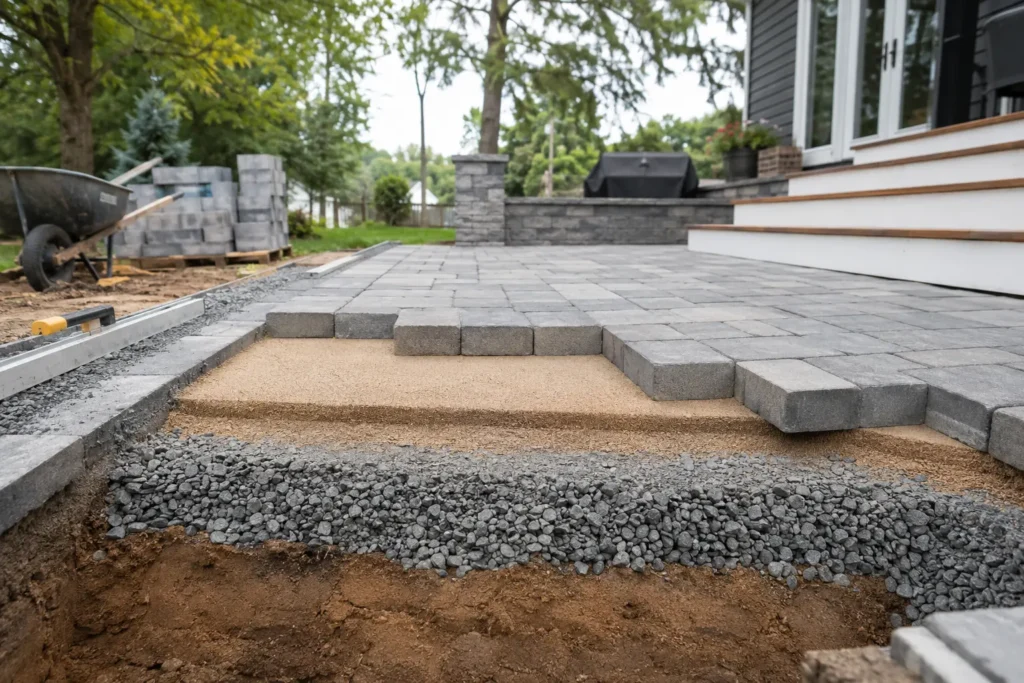
Your base is everything, literally. Make it too thin or don’t pack it tightly enough, and your patio won’t stay level.
What your base should look like depends on your soil, your region, drainage, and how you’ll use the patio. You can’t just toss some gravel down and hope for the best. Walkways and patios for heavy grills or furniture all need different prep.
Experienced installers put a lot of care into what’s under the pavers, not just what’s on top. The surface might look great on day one, but you’ll see the real results when the ground starts to settle after a few months.
This is one of the most important parts of paver installation because the surface depends on what is underneath it.
Mistake 4: Forgetting About Water
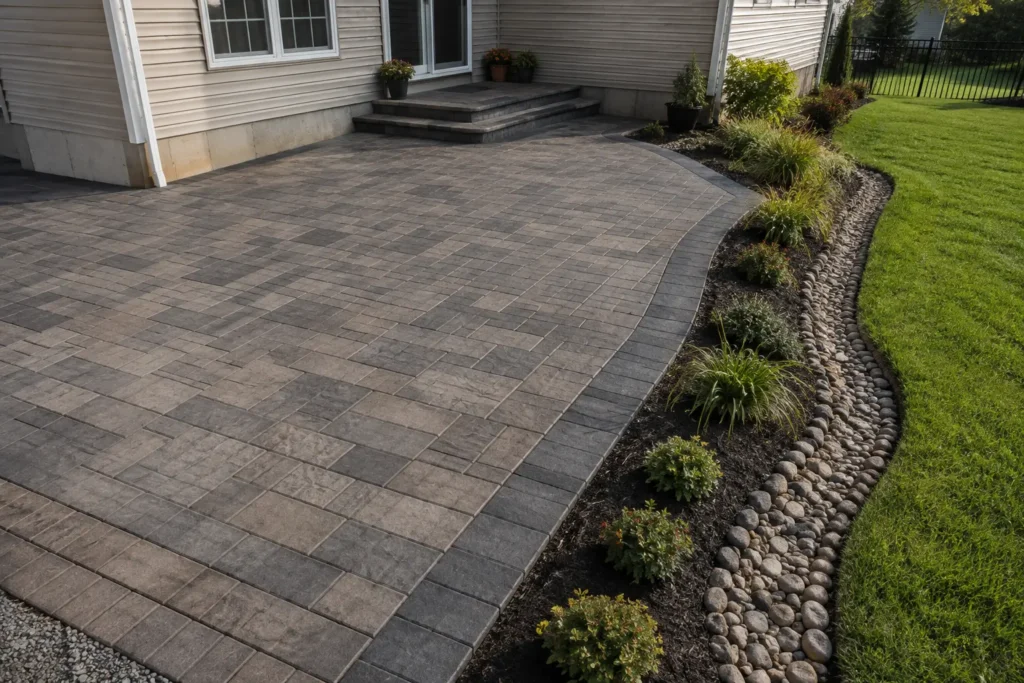
Water’s a big deal in any outdoor project. If you don’t give it somewhere to go, it’ll collect on your patio or worse, right next to your house.
Standing water can cause the ground to settle or even damage your foundation. At the planning stage, pay attention to how rain moves across your yard. Your new patio should help rain flow away, not puddle up.
Your patio is just one part of your overall landscape. It has to fit into your yard’s drainage system, not fight against it.
Good patio landscaping should work with the existing drainage and the rest of the property.
Mistake 5: Ignoring the Important Steps in Leveling
The most exciting part is laying pavers, so it’s tempting to rush there. But if your base isn’t level or smooth, the finished patio will never look right, no matter how carefully you set the pavers.
Take time to create a flat, even base with crisp lines and transitions. Keep things straight and leave uniform gaps. When you stand back, you want the whole setup to look intentional from every angle.
A proper paver patio installation depends on careful preparation before the pavers are placed.
Mistake 6: Only Focused on How It Looks
You’ll see lots of beautiful paver patio ideas online, but don’t just copy a photo. That design might not fit your yard, house style, or needs.
Big, bold patterns can look dramatic, but they’re often too much for a small backyard, and tricky designs mean more cutting and labor. Pick a patio layout that suits your space and how you’ll actually use it. Make it work with your house, landscaping, and walkways.
Basically, your goal isn’t just to make the patio look good. It should feel like a natural part of your yard.
Good landscape design can help make sure the patio works with the rest of the property rather than looking like a separate feature.
Mistake 7: Skipping Edge Restraints
If you forget about the edges, pavers start shifting sideways. Eventually, the patio loses its shape and stability.
Edge restraints keep everything together. They’re easy to overlook since they’re usually out of sight, but they’re a big deal. Ask your installer how they’ll lock in the edges before work begins.
Mistake 8: Picking Materials in a Bubble
Don’t treat the patio like a separate little island. Choose pavers that pair well with your house’s brick, siding, stone, landscape, and even your fence. Color, texture, and even the paver shape all matter.
This is even more important if you’re building a larger outdoor living space outside. Think about what else might go in: garden beds, lighting, benches, pathways. When everything works together, the whole yard flows naturally.
Good hardscaping should complement the existing property instead of competing with it.
Mistake 9: Choosing a Contractor Only by Price
It’s easy to get drawn in by the lowest bid, but cheaper isn’t always better. Sometimes, it means corners get cut, maybe the base isn’t prepped well, or drainage gets ignored.
Don’t just look at the final cost. Ask what’s included: excavation, prep, materials, finish work, and cleanup. You want transparency, not surprises. Check experience, reviews, and project photos, not just search results like landscape design near me, landscaping companies near me, or landscaping Williamsville NY.
A reliable patio contractor should be able to explain how the project will be prepared and installed.
Mistake 10: Rushing the Job
Everyone wants their patio done yesterday, but speed often means mistakes that you’ll regret later, especially ones buried under the surface.
Most patio installations take a couple of days for smaller spaces, but bigger or more complicated patios can take up to a week, depending on conditions. Some backyards with tough soil or tricky drainage will need even longer.
Don’t push your installer to go fast. Doing it right the first time always pays off.
Mistake 11: Skipping Maintenance
Even the best patio needs some upkeep. Leaves, dirt, and weeds creep into the joints if you ignore them, and before you know it, the patio looks tired. Sweep and clean regularly, and keep an eye out for sinking or shifting pavers.
Spotting small problems early can save you a big headache down the road.
Think Beyond the Pavers
A great patio isn’t just about stacking pavers in a square. Your soil, drainage, the size of the space, your existing landscaping, and how you’ll use the patio – all of that comes into play. The prep work makes your patio last, and a thoughtful layout makes it feel like part of your home.
If you’re building in Williamsville or anywhere else with quirky local conditions, a local pro can help you figure out the right approach. Don’t be afraid to get expert advice.
And if you want background on permeable pavement or technical specs, the Interlocking Concrete Pavement Institute (ICPI) is a solid place to look. Home – Concrete Masonry and Hardscapes Association.
Frequently Asked Questions
How long does it take to install a paver patio?
A 200-square-foot patio usually takes two to three days. Double the area, and it’s three to five days. Bigger jobs can take five to seven days, depending on site conditions.
What’s the most common patio installation mistake?
Not prepping the base well enough. A weak foundation means settling and uneven pavers.
Does a patio need drainage?
Definitely. Good drainage keeps water from pooling and protects your patio and house.
How do I pick a patio design?
Choose something that actually fits your yard, your house style, and your everyday needs. Practical always beats flashy photos.
Should I hire a contractor?
If your project is big or complicated, it’s worth hiring an expert. They’ll handle all the groundwork, drainage, and finishing details, saving you a lot of trouble.
Conclusion
Building a solid, good-looking patio takes more than just laying some pavers. Every detail matters: the base, drainage, materials, the pattern you pick, and making it all work with your yard.
Take your time, plan smart, and avoid the common mistakes. That way, you’ll end up with a patio you’ll love and one that actually lasts.