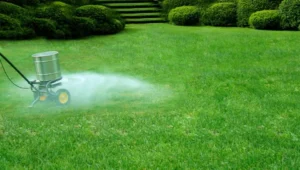
Fall is an important season for lawn care, especially for properties with cool-season grass. As temperatures become cooler, grass may produce less visible growth above the soil while its roots continue developing. This makes fall an important time to prepare your lawn for the colder months ahead.
A well-timed fall lawn fertilization program can provide nutrients that support root development and help your lawn enter winter in better condition. If you’re wondering when to fertilize lawn areas in your yard, it’s important to consider your grass type, soil conditions, weather, and the fertilizer being used rather than following a fixed date.
If you’re preparing your lawn for winter in Clarence, NY, here’s what to know about fall fertilization and proper timing.
Why Fertilize Your Lawn in the Fall?
Fall is an important part of fall lawn care because cool-season grasses remain active as temperatures become milder.
While the top growth of the lawn may slow down, the roots can continue developing when soil temperatures remain suitable. Providing the right nutrients during this period can support root growth and help the grass maintain its condition as winter approaches.
A healthy lawn going into winter can also be better positioned for spring growth.
However, more fertilizer isn’t necessarily better. Applying too much or using the wrong product can damage the lawn or contribute to nutrient runoff. Fertilizer should be selected and applied according to the needs of the lawn.
When Should You Fertilize Your Lawn in Fall?

One of the most common questions homeowners ask is when to fertilize lawn in fall.
There isn’t one calendar date that works for every property. The appropriate timing depends on factors such as:
- Grass type
- Local weather conditions
- Soil temperature
- Previous fertilization
- Soil nutrient levels
- Expected frost and freezing conditions
For lawns with cool-season grass, fall is generally an important fertilization period. In Western New York, homeowners should pay attention to changing temperatures rather than relying solely on a specific date.
Avoid applying fertilizer when the ground is frozen or when conditions are unsuitable for the product being used. If you’re unsure about timing, a lawn-care professional can assess the condition of the grass and recommend an appropriate schedule.
What Type of Fertilizer Should You Use?
Choosing a fall lawn fertilizer isn’t simply a matter of buying a product labeled “fall.”
Different lawns have different nutrient requirements. Soil testing can provide useful information about nutrient levels and help determine whether additional fertilizer is needed.
Depending on the lawn and its condition, a fertilizer program may focus on providing nutrients such as nitrogen, phosphorus, or potassium. However, these nutrients should not be applied automatically. The appropriate formulation and application rate depend on the lawn and soil.
Homeowners interested in an organic lawn fertilizer can also discuss organic or naturally derived options with a lawn-care professional.
How to Apply Lawn Fertilizer Correctly
Proper application is just as important as choosing the right product.
When applying lawn fertilization, keep these practices in mind:
1. Follow the Product Instructions
Always follow the manufacturer’s application rate and instructions. Applying more fertilizer than recommended does not necessarily produce better results.
2. Use the Right Spreader
A broadcast or drop spreader can help distribute granular fertilizer more evenly than applying it by hand.
3. Avoid Hardscape Surfaces
Keep fertilizer off sidewalks, driveways, patios, and other hard surfaces. Sweep stray granules back onto the lawn rather than allowing them to wash into drains.
4. Pay Attention to Weather
Check the weather before applying fertilizer. Heavy rain shortly after application can move nutrients away from the intended area, while unsuitable dry conditions may affect how the product performs.
5. Don’t Fertilize Frozen Ground
Avoid applying fertilizer to frozen soil or when conditions are unsuitable for the product. Nutrients should be available to the lawn rather than sitting on the surface until conditions change.
Should You Fertilize Before Winter?
Fall fertilization is not the same as fertilizing during winter.
Once the ground is frozen and the grass has entered winter dormancy, applying fertilizer generally isn’t useful. The goal is to provide nutrients during the appropriate part of the fall growing period, before winter conditions become established.
For this reason, winter lawn preparation should begin while the lawn is still able to use the nutrients being applied.
Don’t Forget the Rest of Your Fall Lawn Care
Fertilization is only one part of preparing a lawn for winter.
A complete fall lawn care routine may also include:
- Removing leaves and other debris
- Maintaining an appropriate mowing height
- Addressing compacted soil when conditions are suitable
- Overseeding areas that need additional grass coverage
- Managing weeds
- Checking drainage problems
- Cleaning up garden beds
- Preparing irrigation systems for freezing temperatures
These tasks can work together to keep the lawn and surrounding landscape in better condition throughout the colder months.
When Should You Hire a Professional?
Homeowners can handle basic fertilizer applications themselves, but professional help can be useful when a lawn has recurring problems or when you’re unsure what it needs.
Consider professional lawn fertilization services if you are dealing with:
- Thin or weak grass
- Persistent discoloration
- Uneven growth
- Recurring weeds
- Possible nutrient deficiencies
- Poor soil conditions
- Uncertainty about fertilizer selection
- A lawn that has not responded to previous treatments
A professional can evaluate the condition of the lawn and help develop a treatment schedule based on its specific requirements.
Fall Lawn Fertilization in Clarence, NY
For homeowners looking for Lawn Fertilization Clarence NY, seasonal lawn care can be planned around the conditions of the local climate and the needs of the property.
Soil and Seed Landscaping provides Lawn Care Services Clarence NY and surrounding areas. A lawn-care program can include seasonal maintenance and treatments designed around the condition of the lawn rather than relying on a one-size-fits-all approach.
If you’re preparing your lawn for the colder months, fall is a good time to evaluate its condition and determine whether fertilization or other maintenance is needed.
Frequently Asked Questions
Is fall a good time to fertilize a lawn?
For many cool-season lawns, fall is an important fertilization period because the grass can remain active while temperatures become cooler. The appropriate timing depends on grass type, soil conditions, weather, and the fertilizer being used.
How late can I fertilize my lawn in the fall?
There is no universal cutoff date. Fertilization should be completed while the grass and soil conditions are still suitable for nutrient uptake. Avoid applying fertilizer to frozen ground or when conditions are unsuitable.
Should I fertilize my lawn before or after mowing?
Mowing and fertilization can both be part of fall lawn care, but the exact sequence can depend on the fertilizer product and mowing schedule. Follow the product instructions and avoid removing too much of the grass blade when mowing.
Can I use the same fertilizer in fall that I use in spring?
Not necessarily. Fertilizer selection should be based on the lawn’s nutrient requirements, soil conditions, grass type, and the intended application period. A soil test can help determine which nutrients are needed.
Can too much lawn fertilizer damage grass?
Yes. Over-application can damage grass and may increase the risk of nutrient runoff. Always follow the recommended application rate for the fertilizer being used.
Is professional lawn fertilization worth considering?
Professional lawn fertilizer services can be useful when homeowners are unsure which product to use, how much to apply, or when to treat the lawn. Professional care can also be helpful when a lawn has recurring problems that haven’t improved with basic maintenance.
Conclusion
Fall lawn fertilization can be an important part of preparing a cool-season lawn for winter. The key is not simply applying fertilizer, but choosing the appropriate product and applying it at a suitable time and rate.
Combined with mowing, leaf removal, weed management, and other fall lawn maintenance, proper seasonal care can help keep your lawn in good condition as winter approaches.