A successful landscape is about more than choosing attractive plants or adding a new patio. Good landscaping design in Clarence combines plants, hardscaping, outdoor living areas, drainage, lighting, and the natural characteristics of the property into one cohesive plan.
For homeowners in Clarence, NY, landscape design also needs to account for seasonal changes, soil conditions, sunlight, drainage, and the way an outdoor space will be used throughout the year. A thoughtful design can make a yard easier to maintain while creating a more comfortable and attractive place to spend time.
What Is Landscaping Design?
Landscaping design is the process of planning how the different elements of an outdoor property will work together. Instead of adding individual features without a clear plan, a landscape designer considers the entire space and develops a layout around the homeowner’s goals.
A design may include:
- Planting beds and garden areas
- Trees, shrubs, and perennial plants
- Patios and walkways
- Retaining walls
- Lawn areas
- Mulch and groundcover
- Water features
- Outdoor lighting
- Drainage solutions
- Outdoor living areas
The goal is to create an outdoor environment that looks cohesive while also being practical for the property and the people using it.
Why Landscape Design Matters
A landscape design provides a plan before installation begins. This can help homeowners make decisions about the location, size, materials, and relationship between different features before construction or planting starts.
Better Use of Outdoor Space
A well-planned yard can have distinct areas for different purposes. For example, a property might include an open lawn for recreation, a patio for entertaining, and planting beds around the edges for privacy and visual interest.
A More Cohesive Appearance
Without a plan, landscaping elements can look disconnected. Coordinating materials, plant heights, colors, textures, pathways, and garden beds helps create a more unified appearance.
Easier Long-Term Maintenance
Plant placement matters beyond the initial appearance of a landscape. Choosing plants suited to available sunlight, soil and moisture conditions can make future maintenance more manageable.
Greater Functionality
Landscape design can also address practical concerns such as drainage, erosion, privacy, accessibility, and movement through the property.
Key Elements of a Landscaping Design in Clarence
Several elements work together to create a complete landscape.
Hardscaping
Hardscaping includes the non-living features of a landscape, such as patios, walkways, retaining walls, steps, and other structural elements.
These features can define different areas of the yard while providing useful spaces for walking, sitting, entertaining, or managing changes in elevation.
Softscaping
Softscaping refers to the living elements of the landscape, including trees, shrubs, flowers, ornamental grasses, and other plants.
Plant selection should consider more than appearance. Sun exposure, soil conditions, mature size, seasonal interest, and maintenance requirements can all influence whether a particular plant is appropriate.
Outdoor Living Areas
A landscape can be designed around the way homeowners actually use their property. Patios, seating areas, fire-pit spaces, outdoor kitchens, and other features can turn an underused part of a yard into a functional outdoor living area.
Lighting
Landscape lighting can highlight planting beds, pathways, patios, trees, and architectural features. Properly positioned lighting can also improve visibility around frequently used areas after dark.
Water Features
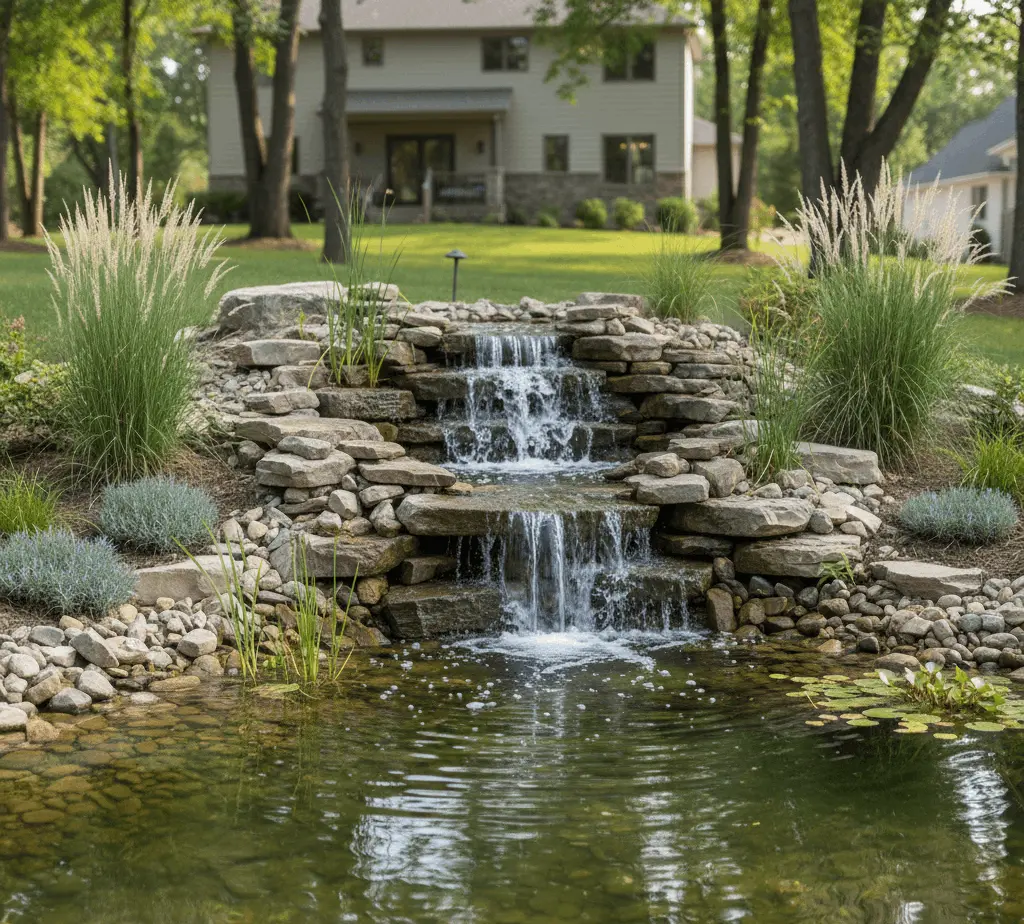
Ponds, fountains, waterfalls, and other water features can serve as focal points within a landscape. Their location should be considered carefully alongside drainage, maintenance requirements, and the overall design.
The Landscape Design Process
A professional landscape design usually begins with understanding the property rather than immediately choosing plants or materials.
1. Assess the Property
The first step is to look at the existing conditions. This can include:
- Soil conditions
- Drainage
- Existing vegetation
- Sun and shade patterns
- Property slopes
- Available space
- Existing structures
- Access points
- Areas that need privacy or screening
Understanding these factors helps prevent design decisions that may cause problems later.
2. Understand the Homeowner’s Goals
Every property has different needs. One homeowner may want a low-maintenance garden, while another may want a larger entertaining area or a landscape designed around colorful seasonal plantings.
The design should reflect how the space will actually be used.
3. Develop the Layout
The different elements are then arranged into a cohesive plan. Paths, patios, lawns, planting beds, trees, walls, and other features should work together rather than compete for space.
4. Select Plants and Materials
Once the layout is established, appropriate plants and hardscape materials can be selected.
For landscaping design in Clarence, plant choices should take local growing conditions and seasonal weather into consideration. Mature plant size is also important so that trees and shrubs have enough room to grow without creating future problems.
5. Prepare for Installation
The final design provides a roadmap for installation. Depending on the project, this may involve grading, soil preparation, hardscape construction, planting, mulching, drainage work, and lighting installation.
Designing for Clarence’s Seasons
A landscape should look good beyond the day it is installed. Planning for different seasons can help maintain visual interest throughout the year.
Spring can bring flowering trees and bulbs, while summer planting can provide color and texture. Fall foliage can add another layer of seasonal interest, and evergreen plants can help maintain structure during the winter.
Seasonal planning also affects maintenance. Leaf cleanup, pruning, mulching, lawn care, and preparation for winter should all be considered when choosing plants and arranging different areas of the landscape.
Common Landscape Design Mistakes to Avoid
Even an attractive idea can create problems if the design doesn’t account for the property’s conditions.
Choosing Plants Without Considering Mature Size
A small shrub may look perfect when planted but eventually become too large for its location. Always consider the plant’s mature height and width.
Ignoring Drainage
Water that consistently collects around planting beds, lawns, or structures can create long-term problems. Drainage should be considered during the planning stage rather than treated as an afterthought.
Overcrowding the Design
Trying to include too many features can make a yard feel cramped. Good design creates enough space for each element to function properly.
Designing Without a Maintenance Plan
A landscape that looks impressive but requires more maintenance than the homeowner wants may not be the right design. Plant selection and layout should reflect the desired level of upkeep.
Creating a Landscape That Fits Your Property
There is no single landscape design that works for every Clarence property. The right approach depends on the size and layout of the yard, existing conditions, homeowner preferences, and how the space will be used.
A well-planned landscape brings these factors together before installation begins. Whether the goal is a welcoming front yard, a functional backyard, new planting beds, or an outdoor entertaining area, thoughtful planning can make the finished landscape more useful and cohesive.
FAQ
What is the difference between landscape design and landscaping?
Landscape design is the planning stage where the layout, plants, materials, and features are selected and organized. Landscaping can refer more broadly to the installation and ongoing maintenance of those elements.
When is the best time to start a landscape design?
Landscape design can be planned before the installation season begins. Starting early gives homeowners more time to consider layouts, materials, plant choices, and project priorities before work begins.
What should I consider when designing a landscape in Clarence NY?
Consider the property’s sunlight, soil, drainage, slope, available space, existing plants, desired maintenance level, and how the outdoor space will be used. Seasonal conditions should also be considered when selecting plants and materials.
Can landscape design include patios and retaining walls?
Yes. A landscape plan can incorporate hardscape features such as patios, walkways, retaining walls, steps, and other structural elements alongside lawns and planting areas.
Does a landscape design need to include plants?
Not necessarily. A design can combine different elements depending on the property and homeowner’s goals. Some projects may emphasize patios, walkways, retaining walls, outdoor living spaces, or other hardscape features, while others may focus heavily on planting.
Conclusion
Good landscape design begins with understanding the property and planning how each element will work together. By considering plants, hardscaping, drainage, lighting, seasonal changes, and maintenance from the beginning, homeowners can create an outdoor space that is both attractive and practical.
If you’re planning a landscape project in Clarence, Soil and Seed Landscaping can help turn your ideas into a coordinated outdoor design and installation plan.