A well-designed garden can turn an ordinary yard into a space that is enjoyable to look at and practical to use. But creating a garden that continues to look good through changing seasons requires more than simply choosing attractive plants.
For homeowners exploring garden landscape design ideas in Getzville NY, the design should take into account sunlight, soil, drainage, available space, seasonal changes, and the amount of maintenance you are willing to handle.
Whether you want a colorful planting bed, a low-maintenance garden, or a space that connects your patio with the rest of your yard, these ideas can help you plan a garden that suits your property.
1. Start With the Conditions of Your Yard
Before choosing plants or designing garden beds, look at the existing conditions of your property.
Pay attention to:
- How much sunlight different areas receive
- Areas that remain shaded
- Existing trees and shrubs
- Soil condition
- Drainage after heavy rain
- Slopes and changes in elevation
- Available space
- Existing patios, walkways, fences, and other structures
A plant that works well in a sunny, well-drained bed may not perform the same way in a shaded or consistently wet location.
Starting with the site rather than the plants makes it easier to develop a practical garden landscape design.
2. Create Garden Beds With Different Heights
A garden can look more interesting when plants are arranged at different heights instead of being placed in one uniform row.
For example, you could use:
- Taller shrubs or ornamental plants toward the back
- Medium-height flowering plants through the middle
- Low-growing plants or groundcovers along the front edge
This creates layers and allows more plants to be visible from different viewpoints.
The same approach can be used around patios, walkways, property boundaries, or the front entrance of your home.
3. Choose Plants for Different Seasons
One common mistake in garden design is creating a space that looks attractive for only a few weeks of the year.
Instead, think about how the garden will change from spring through winter.
You can combine plants that provide different types of interest, including:
- Spring flowers
- Summer blooms
- Plants with attractive foliage
- Fall color
- Evergreen structure
- Interesting bark or branches during winter
A seasonal approach can make the garden feel more intentional throughout the year.
When choosing plants for a garden design in Getzville NY, consider whether each plant is appropriate for the specific conditions of your yard rather than selecting plants based only on appearance.
4. Use Native and Well-Adapted Plants
Native and well-adapted plants can be useful components of a residential garden because they are suited to the conditions in the region.
However, choosing plants should still involve considering the individual site. Sun exposure, soil moisture, drainage, and available space can all affect plant performance.
Rather than filling a garden with a large number of different species, consider selecting a smaller group of plants that work well together.
Repeating several plants throughout the garden can create a more cohesive appearance while making the design easier to maintain.
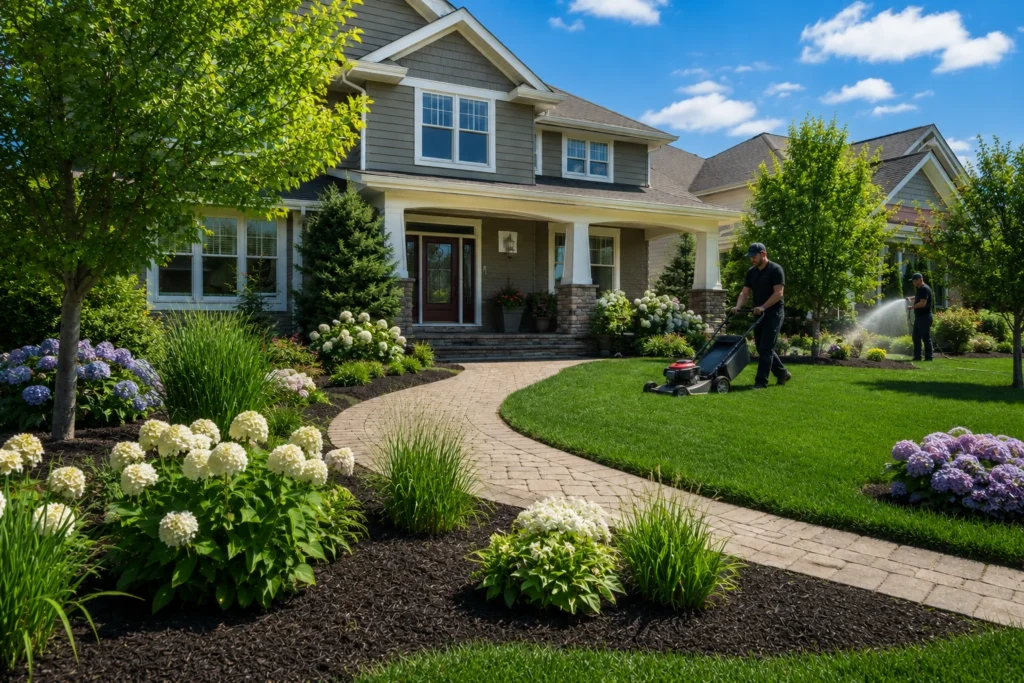
5. Add a Defined Garden Path
A pathway can make a garden feel more organized while also providing a practical way to move through the space.
Depending on the style of your property, a garden path could use:
- Natural stone
- Pavers
- Gravel
- Stepping stones
- Other suitable landscape materials
The path does not have to run through the entire yard. It can simply connect a patio to a garden bed, lead toward a seating area, or provide access for garden maintenance.
Paths can also help divide a larger outdoor area into distinct spaces.
6. Create a Garden Focal Point
A focal point gives the eye a place to settle and can make a garden design feel more deliberate.
Possible focal points include:
- A small water feature
- An ornamental tree
- A decorative planter
- A stone feature
- A seating area
- A distinctive shrub
- A garden structure
The focal point should fit the size and style of the garden. A large feature in a small planting bed can overwhelm the space, while a very small feature may disappear in a larger landscape.
7. Combine Plants With Hardscape Features
Garden landscape design doesn’t have to consist entirely of plants.
Hardscape elements such as patios, retaining walls, walkways, edging, and seating areas can provide structure around planting areas.
For example, a planting bed beside a paver patio can soften the transition between the patio and lawn. A retaining wall can create a defined planting area where the yard has a change in elevation.
Combining hardscape and softscape elements can also help divide an outdoor space according to how you use it.
8. Design Around How You Use Your Yard
The best garden is not necessarily the one with the most plants. It is the one that works for the people using the property.
Before finalizing your design, consider what you want to do in the space.
Do you want:
- A quiet area for relaxing?
- A garden that attracts pollinators?
- More privacy from neighboring properties?
- A colorful view from inside the house?
- A planting area around a patio?
- A simple garden that requires less maintenance?
Your answers can influence the plants, layout, pathways, seating, and other elements included in the design.
9. Plan for Manageable Maintenance
A beautiful garden still needs ongoing care.
Before installing a large planting bed, consider how much time you realistically want to spend maintaining it.
Maintenance can include:
- Weeding
- Watering
- Pruning
- Deadheading flowers
- Mulching
- Dividing or replacing plants
- Removing seasonal debris
Grouping plants with similar maintenance and growing requirements can make garden care easier.
Mulch can also be used around appropriate planting areas to help cover exposed soil and define garden beds. It should be installed at an appropriate depth and kept away from plant stems and tree trunks.
10. Use Mulch to Define Planting Areas
Mulch can serve both a practical and visual purpose in garden design.
A properly maintained mulch bed creates a clear transition between lawn and planting areas while helping the garden look organized.
Different mulch colors and materials can also influence the appearance of the overall landscape. The best choice depends on the plants, surrounding hardscape, and style of the property.
For larger planting beds, professional mulch installation can help create an even, finished appearance.
Garden Landscape Design Ideas for Different Areas
The same design doesn’t need to be used throughout your entire property.
Front Yard Garden
For the front yard, focus on plants and features that complement the entrance and overall architecture of the home.
Layered planting beds, shrubs, flowering plants, and defined edges can create a welcoming appearance without making the area difficult to maintain.
Backyard Garden
A backyard provides more flexibility. You could combine planting beds with a patio, seating area, walkway, or other outdoor living features.
Think about how the garden will look from the house as well as how it will look when you are outside.
Small Garden
A small yard does not require a complicated design. Vertical planting, containers, narrow planting beds, and carefully selected focal points can help make a smaller area feel more purposeful.
Sloped Garden
A sloped property may require additional planning for soil movement, drainage, and access.
Depending on the site, terraces, retaining walls, groundcovers, and strategically placed planting areas may help organize the landscape.
A professional assessment is particularly useful when a garden design involves significant elevation changes.
Sustainable Garden Design Considerations
Sustainability can be incorporated into a garden without making the design complicated.
Some approaches include:
- Selecting plants suited to the site’s conditions
- Using appropriate mulch
- Composting suitable organic materials
- Managing rainwater responsibly
- Reducing unnecessary lawn areas
- Choosing durable landscape materials
- Planting a diverse range of suitable species
The goal is to create a garden that works with the property’s conditions rather than requiring constant correction.
How to Plan Your Garden Landscape Design
A simple planning process can prevent expensive changes later.
Step 1: Assess the property
Record sunlight, shade, soil, drainage, slopes, and existing features.
Step 2: Decide how you will use the space
Determine whether the garden is primarily decorative, recreational, functional, or a combination of these.
Step 3: Choose the layout
Plan planting beds, paths, seating areas, patios, and other features before purchasing plants.
Step 4: Select suitable plants
Choose plants based on their growing requirements and the conditions of the specific area.
Step 5: Plan maintenance
Consider watering, pruning, mulching, seasonal cleanup, and other ongoing requirements.
Step 6: Install the landscape
Complete soil preparation, planting, hardscape work, edging, and mulching according to the design.
Planning these stages in advance can help prevent a garden from becoming a collection of unrelated plants and features.
When Should You Work With a Professional?
DIY gardening can be enjoyable, particularly for small planting projects. However, professional assistance can be useful when you are redesigning a large area or combining several landscape features.
Consider professional garden landscape design services if your project involves:
- A large or complicated yard
- Significant slopes
- Drainage concerns
- New patios or walkways
- Retaining walls
- Multiple planting areas
- A complete landscape redesign
- A long-term maintenance plan
A professional can help turn individual ideas into a coordinated landscape plan.
Frequently Asked Questions
What are some good garden landscape design ideas for Getzville homes?
Popular approaches include layered planting beds, seasonal plants, defined garden paths, focal points, native or well-adapted plants, mulch beds, and combinations of gardens with patios or other outdoor features.
How do I start designing my garden landscape?
Start by evaluating sunlight, soil, drainage, existing vegetation, available space, and how you want to use the garden. Then create a layout before selecting plants and materials.
What plants are suitable for a Getzville garden?
Plant selection depends on the specific conditions of your property. Consider sunlight, soil moisture, drainage, mature plant size, and seasonal characteristics before choosing plants.
How can I make my garden easier to maintain?
Choose plants that match your property’s conditions, group plants with similar requirements, keep the layout manageable, and maintain planting beds with regular weeding, pruning, watering, and mulching.
Can retaining walls be incorporated into garden design?
Yes. Retaining walls can help define planting areas and manage changes in elevation. However, walls supporting significant amounts of soil require careful planning, particularly where drainage and structural stability are concerns.
Should I hire a professional for garden landscape design?
Professional assistance can be useful for larger or more complicated projects involving multiple landscape features, slopes, drainage, hardscaping, or extensive planting.
Create a Garden That Fits Your Getzville Property
Good garden design starts with the property itself. By considering sunlight, soil, drainage, seasonal changes, maintenance requirements, and the way you use your outdoor space, you can create a garden that is both attractive and practical.
If you are looking for garden landscape design ideas in Getzville NY, Soil and Seed Landscaping can help you plan landscape improvements around your property’s needs.
Our landscaping services can include garden design, planting, mulch installation, landscape maintenance, hardscaping, retaining walls, and other outdoor improvements.
Contact Soil and Seed Landscaping at (716) 320-7707 to discuss your garden and landscape design project in Getzville, NY.