A paver patio can create a comfortable outdoor area for dining, relaxing, and entertaining. However, a long-lasting patio requires more than placing pavers on the ground. Proper excavation, base preparation, grading, drainage, and installation all affect how the finished surface performs over time.
For homeowners researching How to Build a Patio Using Pavers Williamsville NY, local conditions are also worth considering. Williamsville and the surrounding Western New York area experience cold winters, seasonal precipitation, and freeze-thaw cycles, so the patio base and drainage system need to be planned carefully.
This guide explains the main steps involved in Building a Patio with Pavers, from planning the layout to finishing and maintaining the completed patio.
1. Choose the Patio Location and Size
Start by deciding where the patio will be located and how you intend to use it.
A small patio may provide enough space for a table and chairs, while a larger outdoor living area may need room for seating, dining, a grill, or other features.
Consider:
- How the patio will connect to the house
- Where people will enter and exit the area
- Existing trees and landscaping
- Sun and shade
- Drainage patterns
- The amount of available space
- Where removed soil and excavated material can go
The location should also allow water to drain away from the house rather than collecting against the foundation.
2. Plan the Layout and Grade
Once the location has been selected, mark the perimeter of the patio.
The layout should establish the patio’s:
- Length and width
- Shape
- Finished elevation
- Relationship to the house
- Connection to existing walkways
- Drainage direction
Proper grading is particularly important for a Paver Patio Williamsville NY because water needs a suitable path away from the patio and nearby structures.
The exact slope will depend on the site and construction requirements. A professional installer can determine the appropriate grade based on the property rather than relying on a one-size-fits-all measurement.
3. Excavate the Patio Area
The next step is removing the existing soil, grass, and other material within the patio footprint.
The required excavation depth depends on factors such as soil conditions, the intended use of the patio, and the materials being installed.
Western New York properties can have challenging soil conditions, so excavation should provide enough room for the required base, bedding layer, and pavers.
Avoid simply placing pavers directly over existing lawn or loose soil. An unstable foundation can contribute to settling, uneven surfaces, and drainage problems.
4. Prepare and Compact the Paver Base
Base preparation is one of the most important parts of Paver Patio Installation.
A suitable compacted aggregate base provides structural support beneath the patio and helps create a stable surface. The material should be installed in appropriate layers and compacted properly rather than placed all at once.
Compaction is especially important because loose material can settle after the patio has been installed.
A properly prepared Paver Patio Base should provide:
- Stability
- Support for the pavers
- Appropriate drainage
- Resistance to settling
- A consistent foundation for the bedding layer
The required base depth depends on the property and project. A professional installer can determine the appropriate construction based on soil and site conditions.
5. Establish Proper Patio Drainage
Drainage should be considered throughout the project, not treated as an afterthought.
A patio should be graded so water can move away from the home and drain toward an appropriate area.
Good Paver Patio Drainage helps reduce standing water and limits the amount of moisture that remains around the base.
Before installing the pavers, consider:
- Where rainwater currently flows
- Whether the property has low areas
- The location of downspouts
- The relationship between the patio and house foundation
- Whether additional drainage measures are necessary
Solving drainage problems before the pavers are installed is generally easier than trying to correct them afterward.
6. Add the Bedding Layer
Once the base has been properly prepared and compacted, the bedding layer can be installed.
This layer provides a consistent surface for setting the pavers. It should be carefully leveled rather than used to correct major irregularities in the underlying base.
The goal is to create an even surface that allows the pavers to sit consistently at the planned finished elevation.
7. Install Edge Restraints
Edge restraints help hold the outside pavers in place and reduce lateral movement.
Without adequate restraint, the edges of a patio can gradually spread, creating wider joints and an uneven appearance.
The appropriate restraint system depends on the patio design and installation method.
This is an important detail because even well-laid pavers can shift if the edges are not properly contained.
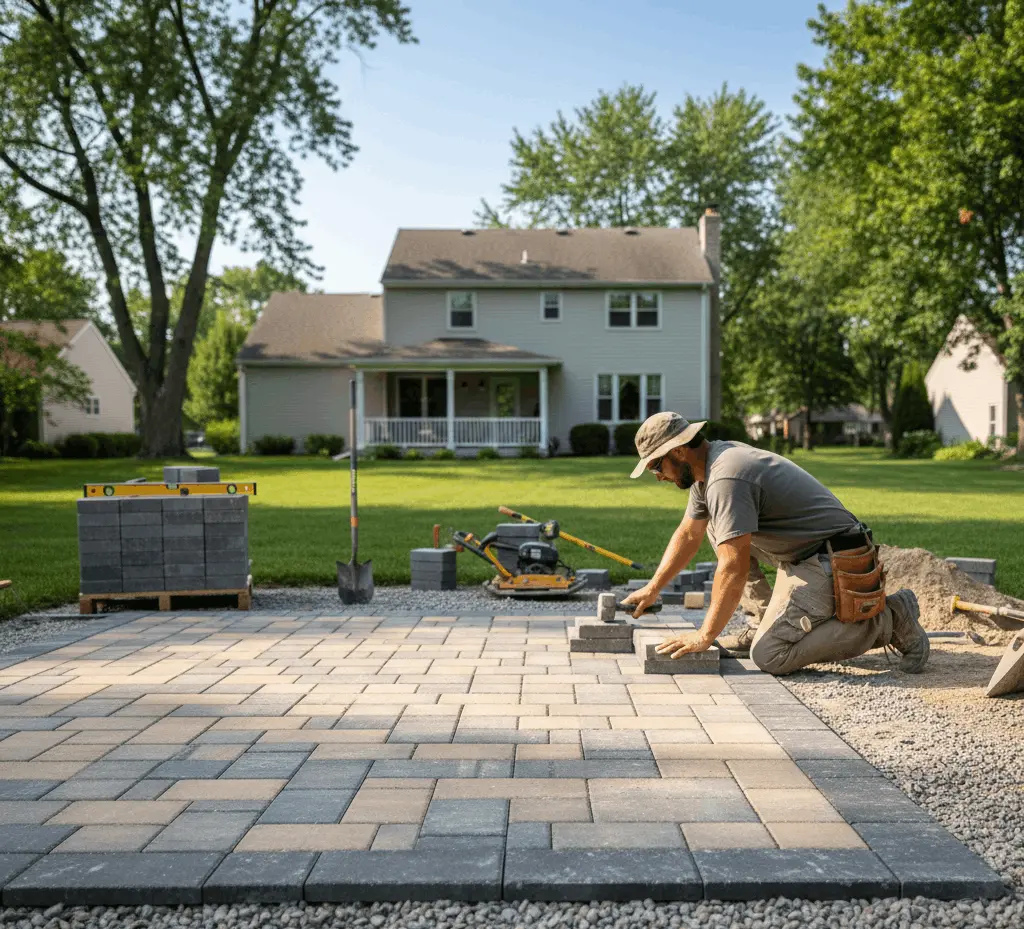
8. Lay the Pavers
With the foundation prepared, the pavers can be installed according to the selected design.
Popular patterns include:
- Running bond
- Herringbone
- Basketweave
- Modular patterns
- Custom layouts
The pattern should be considered during the design stage because different paver sizes and patterns can affect the amount of cutting required.
During installation, the pavers should be aligned consistently and kept at the planned elevation.
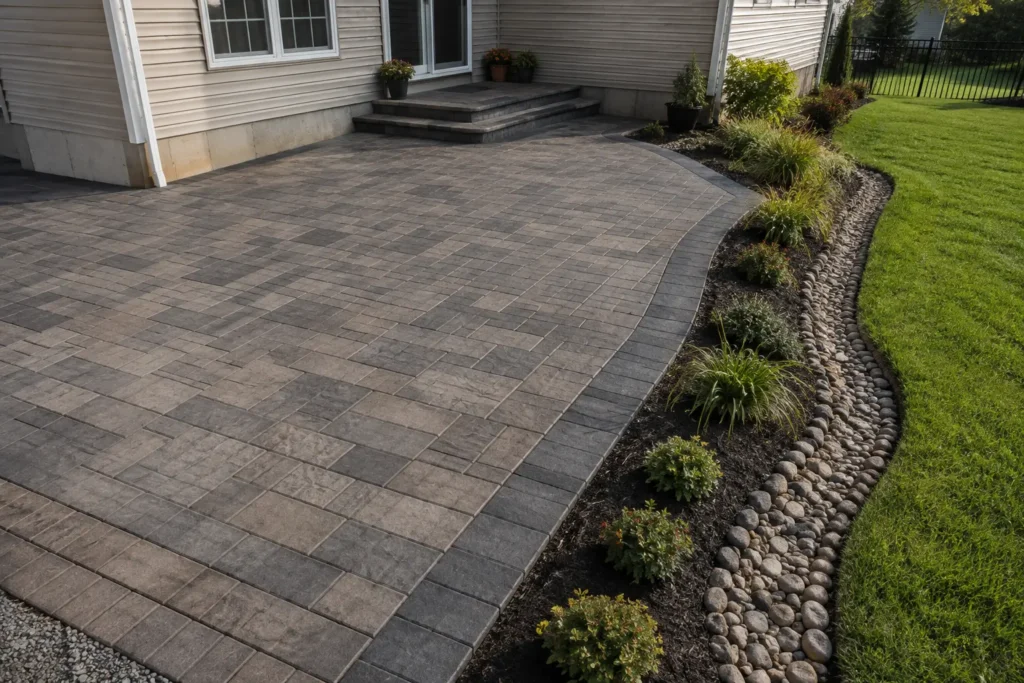
This is where Paver Patio Design becomes both an aesthetic and practical consideration. The pattern should complement the property while also working efficiently with the patio’s shape.
9. Fill the Joints and Compact the Surface
After the pavers have been installed, joint material is swept into the spaces between them.
The surface can then be compacted using appropriate equipment and installation methods.
The goal is to help the pavers interlock and stabilize the finished surface while ensuring the joint material is properly distributed.
The exact finishing process can vary depending on the paver manufacturer and joint material being used.
10. Inspect the Finished Patio
Before considering the project complete, inspect the finished surface.
Check for:
- Uneven pavers
- Inconsistent joints
- Low areas where water may collect
- Loose edge sections
- Poor transitions to walkways or other surfaces
- Areas that need additional joint material
A final inspection can identify small problems before they become more difficult to correct.
DIY vs. Professional Paver Patio Installation
A small paver project may look straightforward, but a patio requires substantial preparation before the first paver is installed.
The most important work often happens underneath the visible surface. Excavation, grading, base preparation, compaction, drainage, and edge restraint all influence the finished result.
For larger patios or properties with difficult grades, drainage problems, or challenging soil, Paver Patio Installation Williamsville NY may be better handled by an experienced contractor.
Professional installation can also be useful when the patio needs to connect to existing walkways, retaining walls, landscaping, or other outdoor features.
Maintaining a Paver Patio
Proper installation is only part of keeping a patio in good condition.
Basic Paver Patio Maintenance can include:
- Sweeping debris from the surface
- Removing weeds from joints
- Replacing joint material when necessary
- Cleaning stains promptly
- Checking for shifted or settled pavers
- Addressing drainage problems
- Inspecting the patio after winter
Avoid using deicing products or cleaning chemicals without checking whether they are appropriate for the specific paver material.
If individual pavers become damaged or settle over time, one advantage of a paver system is that affected sections can often be lifted and repaired without replacing the entire patio.
Planning a Paver Patio for Williamsville’s Climate
Western New York experiences seasonal changes that should be considered when planning an outdoor surface.
A well-designed patio should account for:
- Freeze-thaw cycles
- Rain and snow
- Drainage
- Soil conditions
- Snow removal
- Seasonal maintenance
Proper construction does not eliminate all movement caused by weather, but appropriate site preparation and drainage can help create a more stable patio.
When planning a Paver Patio Williamsville NY, it is therefore important to think about how the surface will perform during both summer use and winter conditions.
When Should You Hire a Professional?
Consider professional help if your project involves:
- A large patio
- Significant excavation
- Sloped terrain
- Drainage concerns
- Difficult soil conditions
- Complex patterns
- Multiple connected outdoor areas
- Retaining walls or other structures
- A patio that connects directly to the home
An experienced contractor can evaluate the property before construction begins and identify issues that may not be obvious from the surface.
FAQ About Building a Paver Patio
How long does a paver patio last?
A properly designed and installed paver patio can provide many years of service. Its lifespan depends on the paver material, installation quality, base preparation, drainage, climate, usage, and maintenance.
What should go under patio pavers?
A typical paver patio uses several layers, including a compacted aggregate base and a suitable bedding layer beneath the pavers. The exact materials and depths depend on the site and project requirements.
Do paver patios work in Western New York?
Yes. Paver patios can be used in areas that experience winter weather and freeze-thaw cycles when they are properly designed, installed, graded, and maintained.
How do you prevent pavers from shifting?
Proper excavation, base preparation, compaction, edge restraints, and joint installation all contribute to a stable paver surface.
Is professional paver patio installation necessary?
Not necessarily for every small project. However, larger or more complicated projects can benefit from professional installation, particularly when the property has drainage, grading, or soil challenges.
Professional Paver Patio Installation in Williamsville, NY
Learning How to Build a Patio Using Pavers Williamsville NY can help homeowners understand what goes into a durable outdoor surface. The visible pavers are only one part of the project; proper excavation, base preparation, grading, drainage, and finishing are equally important.
If you are planning a new patio and would prefer professional assistance, Soil and Seed Landscaping provides Paver Patio Installation Williamsville NY and can help with planning an outdoor space that fits your property’s layout and intended use.
For professional landscaping and patio services, contact Soil and Seed Landscaping at (716) 320-7707 or visit the company in Clarence at 5369 Marguerites Wy, Clarence, NY 14031 to discuss your project and request a free estimate.