A retaining wall is more than just a barrier keeping dirt in place. It protects your yard, stops erosion, and helps you carve out safe, great-looking outdoor areas. But here’s the thing: Even the strongest wall can fail if you don’t handle drainage the right way. A lot of people get hung up on how their wall looks or how solid it seems and forget about what’s happening out of sight, behind the wall. When water piles up back there, that’s when walls start to crack, lean, or even come crashing down.
If you know what can go wrong with retaining wall drainage mistakes, you can dodge expensive repairs and keep your property safe for years. So, whether you’re building a new wall or taking care of an old one, always put drainage at the top of your list. And honestly, if you’re unsure, reach out to Soil and Seed Landscaping at (716) 320-7707. They know their stuff and can walk you through your options.
Why Drainage Is a Big Deal for Retaining Walls
Every rainy day, water moves through the soil behind your retaining wall. Without a way out, that water just sits there, building up pressure, hydrostatic pressure, to be exact. That push can force your wall forward or split it apart.
Good drainage lets water escape before it becomes a problem. It keeps your wall sturdy and helps it last longer. So, a solid retaining wall isn’t just about strong blocks or fancy stone; it needs a real drainage plan, too.
Mistake 1: Skipping Drainage Pipes
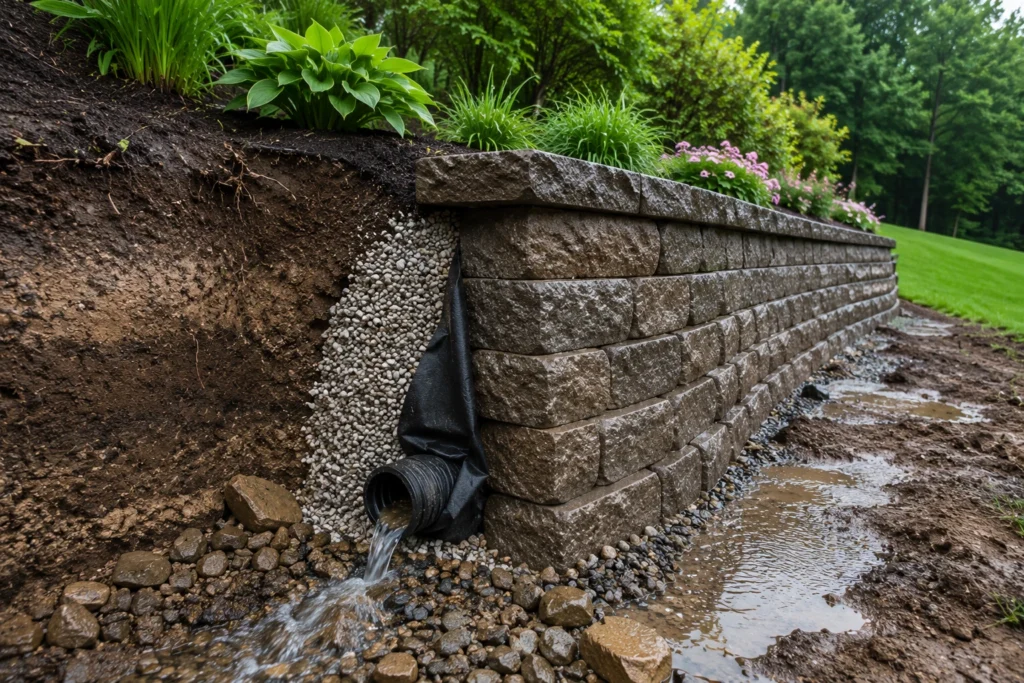
Maybe the most common mistake of all? Forgetting drainage pipes. Some folks think a little gravel will do the trick, but gravel alone can’t handle big downpours.
A perforated pipe at the base scoops up water and sends it somewhere safe. If you skip the pipe, water hangs out behind your wall, slowly adding pressure. Even a well-built wall will start to tip or break if it can’t drain.
Mistake 2: Using the Wrong Backfill
What you pack behind the wall matters. Too many people just use dirt from the yard instead of crushed stone or gravel.
Heavy clay keeps water trapped. But if you go with crushed stone or clean gravel, everything drains easier and heads towards the pipe. It’s one of those small choices that make a huge difference down the line.
Good contractors know this, and picking the right backfill from the start saves money and headaches later.
Mistake 3: Forgetting About Surface Water
Not all problems come from below ground. Water running across your lawn can be just as tough on retaining walls.
If your yard slopes toward the wall, you’re just adding to the problem. Good grading is an important part of landscape design because it sends water away, not towards the structure, so rainwater doesn’t add even more pressure.
When you plan well, water goes where it’s supposed to, somewhere safe, without pooling up behind your wall.
Mistake 4: No Place for Water to Go
Putting in a drainage pipe is only half the job. That water needs an exit.
Walls often need weep holes or pipe outlets, little spots where water can actually leave. If these are missing or get blocked, your whole drainage system backs up.
It’s smart to check these outlets from time to time, just to make sure nothing is clogged.
Mistake 5: Compaction Gone Wrong
Getting the ground firm is important, but if you go overboard, you can pack the backfill so tight the water can’t move.
Experienced builders know how to strike a balance. They compact the base for strength but keep enough space in the backfill so water can still get through. Getting pros involved keeps you from running into trouble later.
Mistake 6: Ignoring Maintenance
Even a great drainage design can clog up if you don’t check it every so often. Leaves and debris easily block outlets.
Regular Garden maintenance by homeowners or professionals means keeping the area around your wall clean, pulling out weeds, and checking for erosion. It’s an easy way to make sure your expensive wall lasts as long as it should.
A little work here and there goes a long way toward avoiding major damage later.
Mulch and Retaining Walls
Mulch installation looks great and helps your plants, but you have to be careful where you put it. Piling mulch up against drainage outlets can block water flow. And if you’re not careful during installation, it might wash right into your drains in heavy rain.
Just keep mulch a little away from outlets so water can still get through. You get all the benefits without messing with your drainage system.
Healthy Lawns Help, Too
A lush lawn isn’t just about looks. Grass helps suck up rainwater and keeps soil in place around your wall. With regular lawn maintenance service, your grass stays healthy, so less water rushes towards the wall in storms.
Combine that with good drainage, and your yard becomes even more low maintenance and protected.
Paver Patios and Drainage
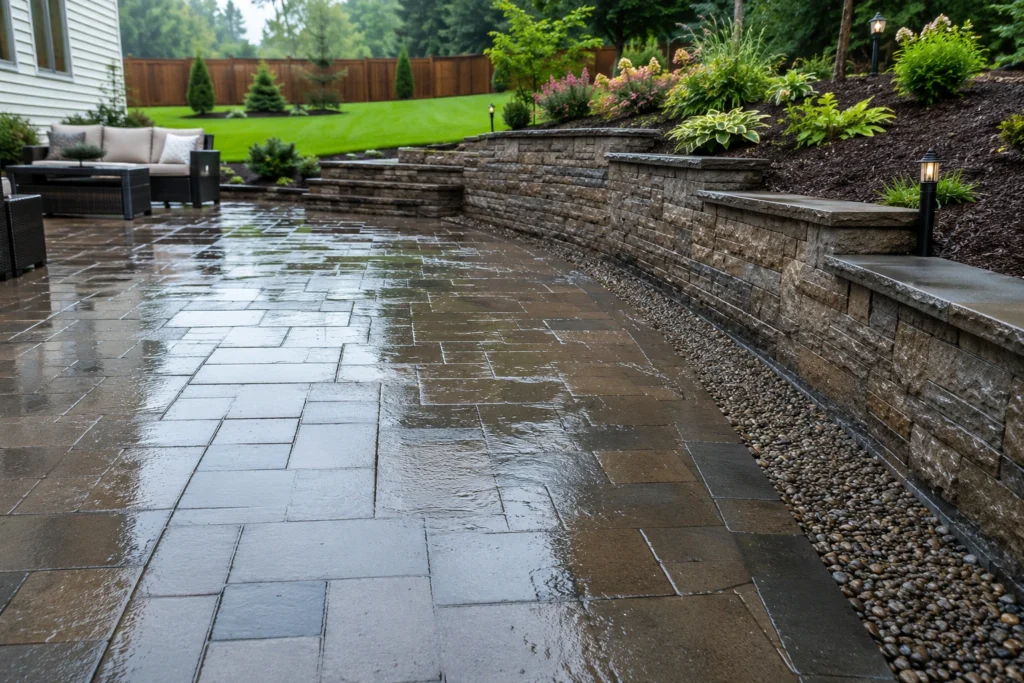
If you’re putting in a patio, don’t forget about drainage here, either. During paver patio installation, contractors should leave a slight slope so water runs away from the wall, not towards it.
A flat patio, or one that tips the wrong way, can dump water straight at your wall and cut its life short.
Being thoughtful about each landscape feature makes sure they all work together when storms roll in.
When to Worry: Signs of Drainage Problems
Before a wall fails completely, you’ll usually see warning signs. Small cracks, a slight lean forward, and sometimes the wall bulges out a bit. After it rains, you might see water pooling at the base or notice lots of dirt washed out from between the blocks.
If any of this pops up, don’t wait. Fixing a small drainage issue is way cheaper than rebuilding the wall later.
How Pros Keep Walls Standing Strong
There’s more to building a good wall than pouring in a pipe. You need to know your soil, weather patterns, and how water moves around your yard.
Professional landscaping services plan drainage right into the wall’s design. They use the right materials, lay everything out carefully, and check that water has a safe path away from your wall.
Getting pros involved early also means they’ll spot any trouble before it becomes a pricey repair job.
Don’t Skimp on Drainage
Retaining walls are meant to last, but only if you manage water correctly. Most of the time, it’s not the materials that fail; it’s poor drainage. Avoiding common retaining wall drainage mistakes saves you money, time, and maybe even your home’s curb appeal.
So, don’t overlook drainage, whether you’re putting in a new wall or keeping an old one in shape. Inspections, the right materials, and little bits of regular upkeep all make a difference.
If you want help, because let’s face it, it can get technical, call Soil and Seed Landscaping at (716) 320-7707. They can handle design, installation, and maintenance, so you end up with a wall (and yard) that looks good and lasts.
For more guidance on retaining wall drainage and erosion control, the U.S. EPA has a lot of helpful info at https://www.epa.gov/soakuptherain.
FAQ
What’s the most common drainage mistake for retaining walls?
Skipping a drainage pipe. When water has nowhere to go, it builds pressure and damages the wall.
How often should I check my retaining wall’s drainage?
Take a look at least once a year and always after a big storm to spot any clogs or new problems.
Can poor drainage really make a wall lean?
Absolutely. Trapped water adds pressure and can make the wall tilt, crack, or even fall.
Does mulch mess with wall drainage?
It can. Too much mulch installation near outlets can block water. Keep it clear and away from drain spots.
Should I hire professionals to handle my wall’s drainage?
If you want it done right and want to avoid future repairs, yes. Professional landscaping services handle grading, drainage, and construction so your wall stays put.