Mulch installation is one of the simplest ways to boost the look and health of your landscape. When you use it right, it keeps the soil moist, controls temperature, fights off weeds, cuts down on erosion, and protects your plants’ roots. But spreading mulch isn’t just dumping a big pile everywhere you see bare dirt; it takes a little know-how. Learning how to mulch your lawn properly can help you get the most from your landscaping without damaging your grass or plants.
Remember, mulch is really for your garden beds and landscape areas. Don’t cover the grass. Your lawn needs sun, air, and water to stay healthy, so keep it clear.
If you live in Clarence, NY, spring is a great time to freshen up your mulch. Plants are waking up, new growth is popping up everywhere, and a good layer of fresh mulch gets your beds ready for the heat and keeps that precious moisture in the soil.
Why Mulch Matters
Mulch acts like a shield for the soil. It slows down evaporation, evens out those wild temperature swings, and makes it tough for weed seeds to sprout. If you go with organic mulch, it does double duty: as it breaks down, it actually feeds your soil.
Mulch is a lifesaver during hot summers. When rain is unreliable, your mulch traps moisture right where your plants need it. It won’t let you skip watering completely, but it definitely means you water less often.
Plus, a tidy layer of mulch just makes your landscape look polished. If you want help choosing the right material or installing it, the team at Soil and Seed Landscaping can walk you through your options and do the job right. Call them at (716) 320-7707 to talk specifics.
When Should You Mulch in Clarence, NY?
Most folks in Clarence refresh their mulch in spring. Wait until you see plants starting to grow and the soil warming up. Add mulch then, and you’ll keep beds moist and much less weedy all season.
Before piling on new mulch, prep the bed. Pull out weeds, clear away thick layers of old mulch if it’s building up, and check how the soil looks. Don’t just add fresh mulch on top of old, year after year.
Keep an eye on your mulch over the summer too. It helps hold in water and shields the roots from crazy temperature swings, but if things get dry, you’ll still need to water.
How to Mulch your lawn Like a Pro
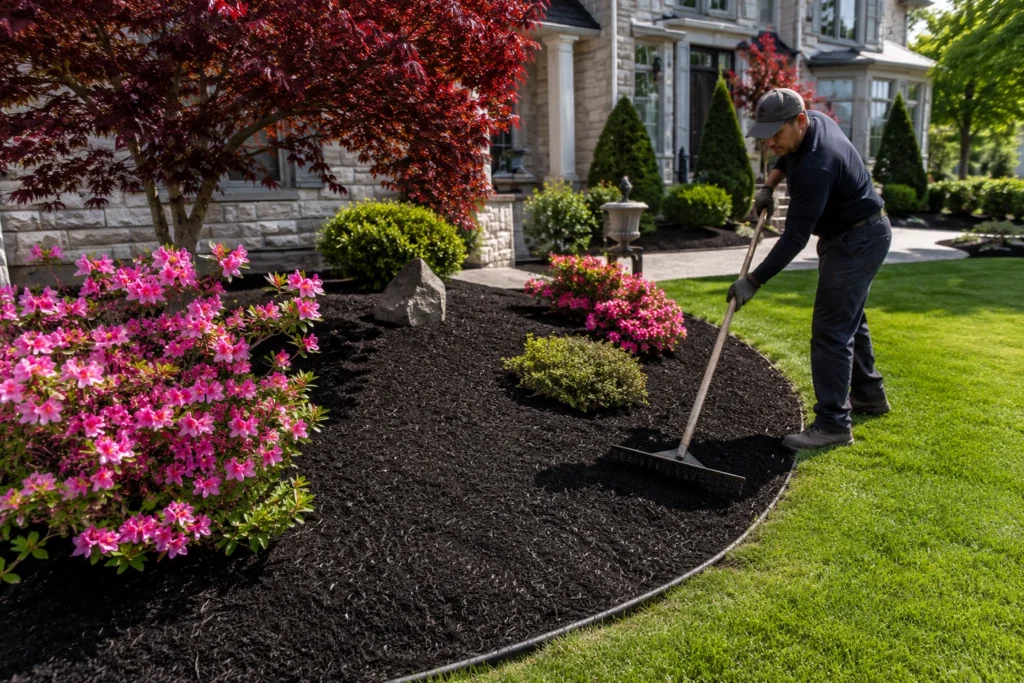
Start by weeding the bed and smoothing out the soil. That way, the mulch covers evenly.
Before you mulch your lawn’s surrounding garden beds, check the existing mulch depth and remove excess material where necessary. For most beds, 2 to 4 inches is just right.
Spread mulch flat; don’t mound it up. Keep it off flower stems and don’t pile it against tree trunks. Only cover the soil surface; organic mulch breaks down from the top anyway, so you don’t need to dig it in.
Mulch Depth: How Much Is Enough?
Stick with a 2 to 4 inch layer for most beds. Go thinner, and you’re not doing much to stop weeds or keep in moisture. Too thick, and you’ll choke out your plants.
Remember, mulch settles and breaks down. Before dumping more on, check how much is left from last time and only top it up as needed.
Keep Mulch Off Tree Trunks and Plant Stems
Don’t fall into the “mulch volcano” trap. Piling mulch up against tree bark sets up problems: dampness, decay, and all sorts of trouble.
Leave a ring of space around trunks and plant stems. Give young trees a few inches of breathing room and even more for mature trees. Spread mulch outward over the root zone, not up the trunk. The root flare should always be visible.
Choosing the Best Mulch
There’s no one-size-fits-all answer. Pick what works for your plants, your soil, and the look you want.
Wood mulch is classic around trees, shrubs, and perennials, natural-looking and slow to break down.
Bark mulch? Nice and tidy, it looks good in ornamental beds and around shrubs.
Compost is excellent if your goal is to feed your soil, but it disappears quickly, so don’t expect it to last long as a mulch surface.
Straw works in veggie gardens, but make sure it’s clean and weed-seed-free.
Inorganic mulches like stone or gravel don’t break down, so you don’t need to refresh them often, but they also don’t add anything back to the soil.
There’s no universal “best” mulch. Each material comes with its pros and cons. What matters is what your landscape needs.
Mulch for Weed Control
Mulch blocks light and creates a barrier, so annual weeds have a tougher time starting. Still, don’t expect a totally weed-free garden.
You want to start with a weed-free bed, check for new weeds throughout the season, and keep your mulch at the right depth. Don’t rely on herbicides; good prep and maintenance do the heavy lifting.
Professional Mulching in Clarence, NY
Doing mulch right makes your garden easier to manage and seriously improves that curb appeal. The details – how much, what kind, how deep, really matter.
If you’re in Clarence and thinking about upgrading your mulch this spring, call Soil and Seed Landscaping at (716) 320-7707 for professional help with Mulch Installation Clarence NY.
Want to dive deeper? Check out the University of Minnesota Extension’s guide for more on mulch’s benefits and best practices: https://extension.umn.edu/garden-and-home/yard-and-garden/gardening-in-minnesota/mulching-for-soil-and-garden-health.
Frequently Asked Questions
1. How deep should mulch be in a garden bed?
Go with 2 to 4 inches for most beds.
2. Does mulch completely stop weeds?
Nope. It helps a lot, but you’ll still see a few weeds now and then.
3. Is wood mulch good for garden beds?
Yes, especially for shrubs, trees, and perennials. It holds moisture and breaks down slowly.
4. When’s the best time to mulch in Clarence, NY?
Spring. Wait until plants are coming up and the soil is warming. Mulch will help lock in moisture all summer.